
Logical Fallacy and the Law: "Post Hoc Ergo Propter Hoc"
09/24/14
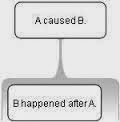
 "Post hoc ergo propter hoc" - Latin for the fallacy of reasoning of "after this, therefore because of this." This episode from West Wing assumes that at least one of the 27 lawyers in the room would know what it means. Even Sheldon in Big Bang is familiar with this logical fallacy and so the all logical Spock.
 Huss v. Gayden, 571 F.3d 442 (5th Cir. 2009) cites the 11th Circuit's explanation and use of this logical fallacy in McClain v. Metabolife International, Inc. 401 F.3d 1233, 1243 (11th Cir. 2005) in the determination of the admissibility of expert testimony under a Daubert analysis. The Court in Huss reviewed that it "is axiomatic that causation testimony is inadmissible if an expert relies upon studies or publications, the authors of which were themselves unwilling to conclude that causation had been proven." Gen. Elec. Co. v Joiner, 522 U.S. 136, 145-46 (1997). Judge Moore of the Southern District cites McClain in the case of Kilpatrick v. Breg, Inc.,2009 WL 2058384 *9, (S.D. Fla. 2009).
"Post hoc ergo propter hoc" - Latin for the fallacy of reasoning of "after this, therefore because of this." This episode from West Wing assumes that at least one of the 27 lawyers in the room would know what it means. Even Sheldon in Big Bang is familiar with this logical fallacy and so the all logical Spock.Logical Fallacy
Spoke explains it best. In short, this is a logical fallacy referring to questionable causation, meaning that "since event Y followed event X, event Y must have been caused by event X" and gives this example: "The rooster crows immediately before the sunrise, therefor the rooster causes the sun to rise." Here is a further explanation.
5th and 11th Circuit
Huss v. Gayden, 571 F.3d 442 (5th Cir. 2009) cites the 11th Circuit's explanation and use of this logical fallacy in McClain v. Metabolife International, Inc. 401 F.3d 1233, 1243 (11th Cir. 2005) in the determination of the admissibility of expert testimony under a Daubert analysis. The Court in Huss reviewed that it "is axiomatic that causation testimony is inadmissible if an expert relies upon studies or publications, the authors of which were themselves unwilling to conclude that causation had been proven." Gen. Elec. Co. v Joiner, 522 U.S. 136, 145-46 (1997). Judge Moore of the Southern District cites McClain in the case of Kilpatrick v. Breg, Inc.,2009 WL 2058384 *9, (S.D. Fla. 2009).
Actually, further review reveals that the McClain case is a landmark decision in the world of "junk science" and toxic torts and product liability. This article cites the related "pithy legalism" of Judge Richard Posner that the "law lags science; it does not lead it." Rosen v. Ciba-Geigy Corp., 78 F.3d 316, 319 (7th Cir. 1996).
Chapter 13 Context
The Court in In re Seger stated that the argument being made seemed like "post hoc ergo propter hoc" logical fallacy in the case of In re Seger, 444 B.R. 492 (Bank. D. Mass. 2011) regarding the administrative obligations of chapter 13 debtors who engage in business. The Court explained that while a
statement of receipts and disbursements may include receipts and disbursements reflected on a bank statement it will also include all other transactions . . . such as cash and credit card transactions. In fact, a statement of receipts and disbursements may be required even when there are no financial transactions whatsoever and there is no bank account.
More
Here is an explanation of further logical fallacies and critical thinking that may help a lawyer. Here is more and more and more and more and more and finally the logical fallacy that has caused some much trouble: "Don't worry, home prices have not fallen since the Great Depression".
[more]
- Feeds Categories: